




Practically every child entering first grade can already count, read, and knows a couple of phrases in English. Parents are proud of their little one's erudition. However, many forget that their child desperately needs help and support in learning without over-parenting.
Check if you are making these 5 common mistakes with your first-grader.
Mistake #1. Underestimating school difficulties
It seems like what problems could a schoolchild have, besides academic performance. But a child's world at 6-7 years old is much more diverse. A student can be concerned about many issues that adults don't even suspect. For example, how to pluck up the courage to raise their hand and ask to go to the restroom or complain about unappetizing food in the cafeteria. Some of these can be alleviated by having a heart-to-heart talk.
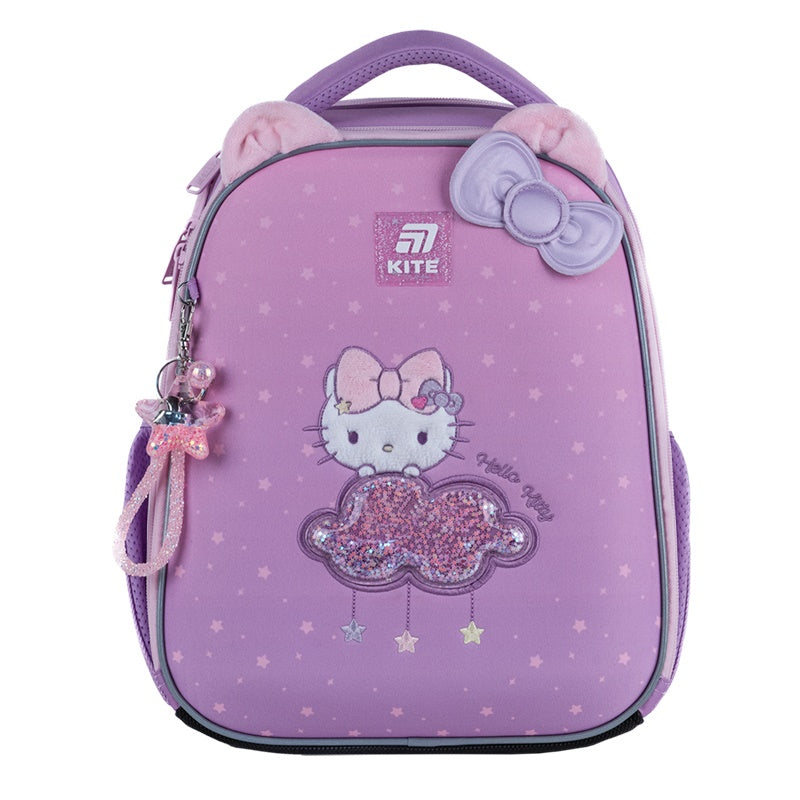
Untidiness in a notebook can be remedied with a "write-and-erase" pen. Worried if they're hungry? Put a lunchbox for a snack and a bottle of water in their backpack. Enroll them in sports clubs to give them a chance to "run off energy" and be more focused in class.
Many school rules are difficult for a first-grader. They have to learn to follow them, which is incredibly challenging at that age. On average, adaptation lasts about 1-2 months, after which the new daily routine and learning conditions gradually become habitual.
Mistake #2. Doing everything for the child
Often mothers, and especially grandmothers, worry too much about their first-graders. They carry their backpack to and from school, don't teach them order, pack their bag for them, and even do their homework for certain subjects. As a result, in older grades, they end up with an infantile child who hasn't been taught order, is capricious, and indifferent to learning.
Yes, at first it's easier for the mother herself. It's more convenient to personally put sneakers in the shoe bag, collect all the pens, notebooks, plasticine, and other stationery in the backpack. Quickly draw a flower in a vase, instead of waiting for the child to complete this task in 2 hours.
Such underestimation of a student's capabilities quickly suppresses their independence. Indifference and irresponsibility appear. Who forgot to put the drawing album? Right, it's mom's fault, because she packed the bag. And so it is with everything. And then parents wonder who their child takes after: constantly confusing everything, forgetting, and not wanting to take responsibility for their actions.
Mistake #3. Lowering self-esteem
Recall the first question you ask when you meet your child from school:
- "What did you get?"
- "How was your day?"
- "Did anyone bother you?"
- "What did you eat?"
Psychologists suggest analyzing the first minutes of conversation. Based on these, one can conclude what is most important for the mother. And they convey the importance of these moments to the child. It will not be easy for the student whose parents prioritize grades.
At this age, emotional closeness is more important for a child than some marks, so it is difficult for the child to understand why their beloved parents suddenly act strictly and even punish them. Some throw tantrums, some withdraw or start lying about their academic performance, and some completely devalue themselves as a person.
Praise the effort, not the result. Don't compare with other children. Motivate them to correct mistakes and bad grades.
Mistake #4. Enrolling in all sections
There are 2 extremes: either pity the child and, apart from school, not allow them to develop anywhere else, or enroll them in several sections at once so they have no free time. In the first case, you miss the chance to develop your first-grader, you don't allow them to realize their talents. After all, it's not by school alone... And in the second case, they face physical and moral overwork.
Consult with your first-grader. They are old enough to express their opinion. Try different options. Look for activities that will bring them joy and distract them from their studies.
Mistake #5. Criticism
Condemning the teacher, school rules, or teaching methods in front of the child leads to dissonance. After all, on the one hand, you demand obedience to school rules and good grades. On the other hand, you devalue your demands by stating that the teacher is strange or that wearing a PE uniform is not mandatory.
Children naively repeat your words at school, which does nothing to improve relations with teachers.
Avoid these common mistakes and rest assured: your child will successfully master their new social role – the role of a student. And all you need to do is love and support them.
Don't know where to start? Start with the right Kite stationery!

