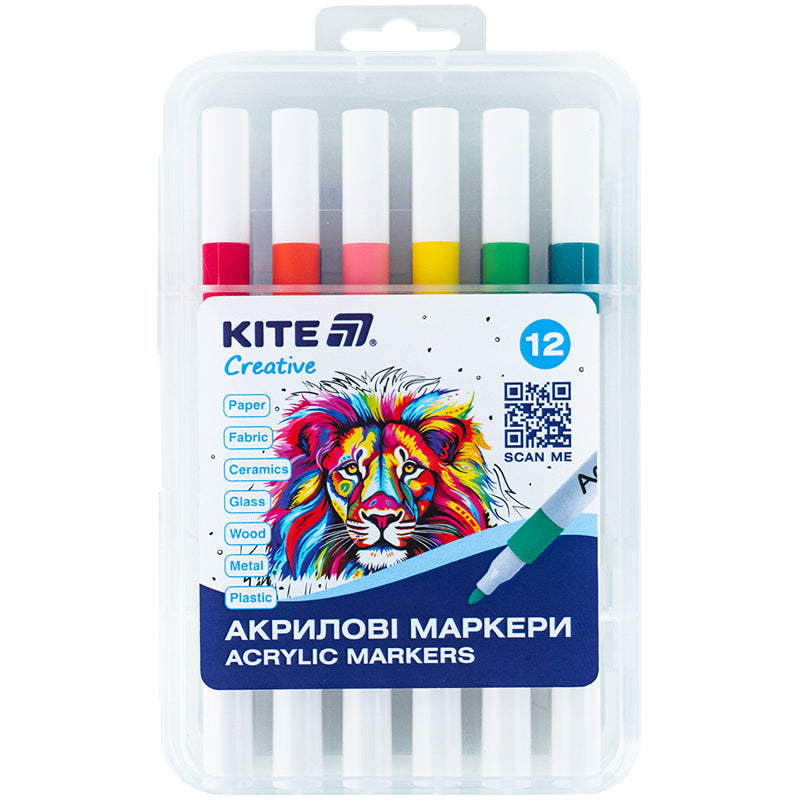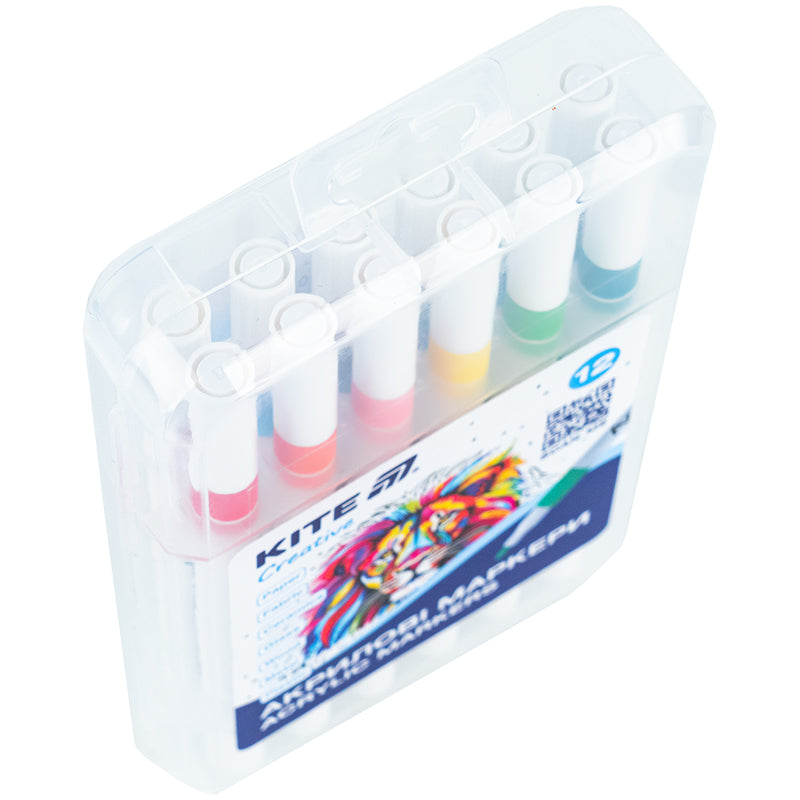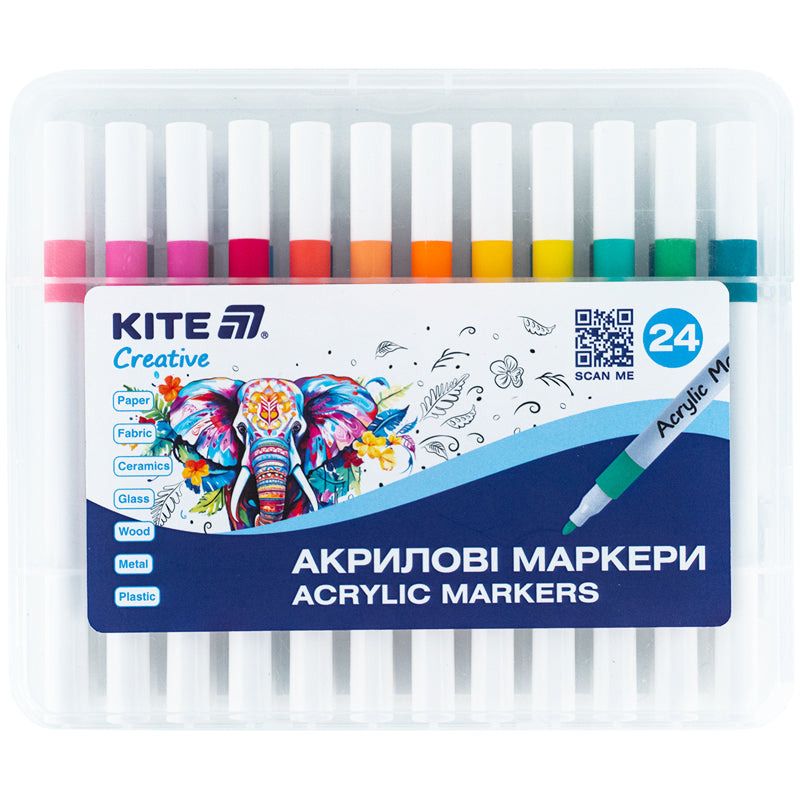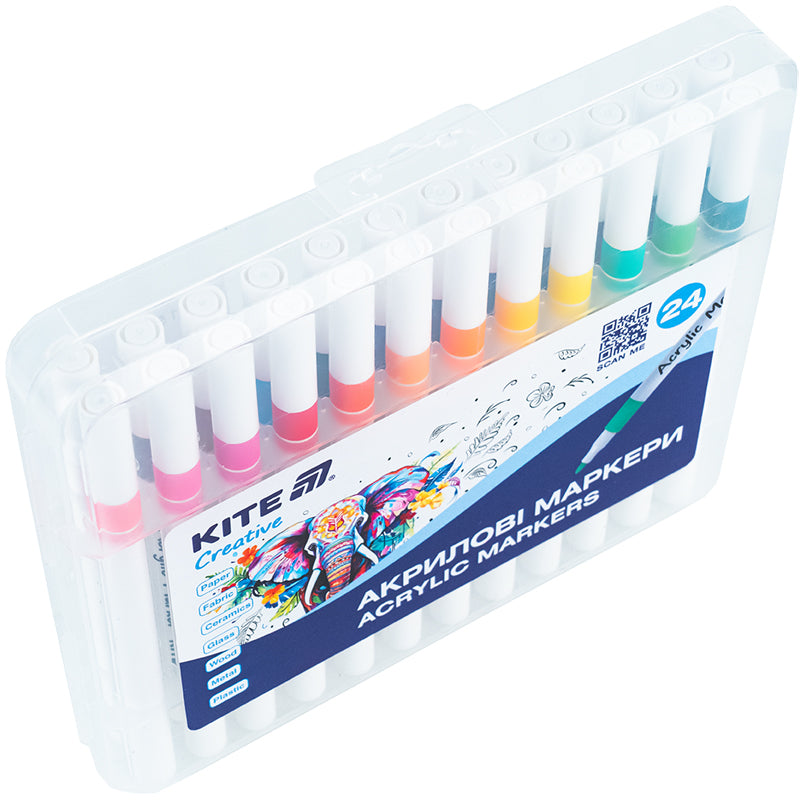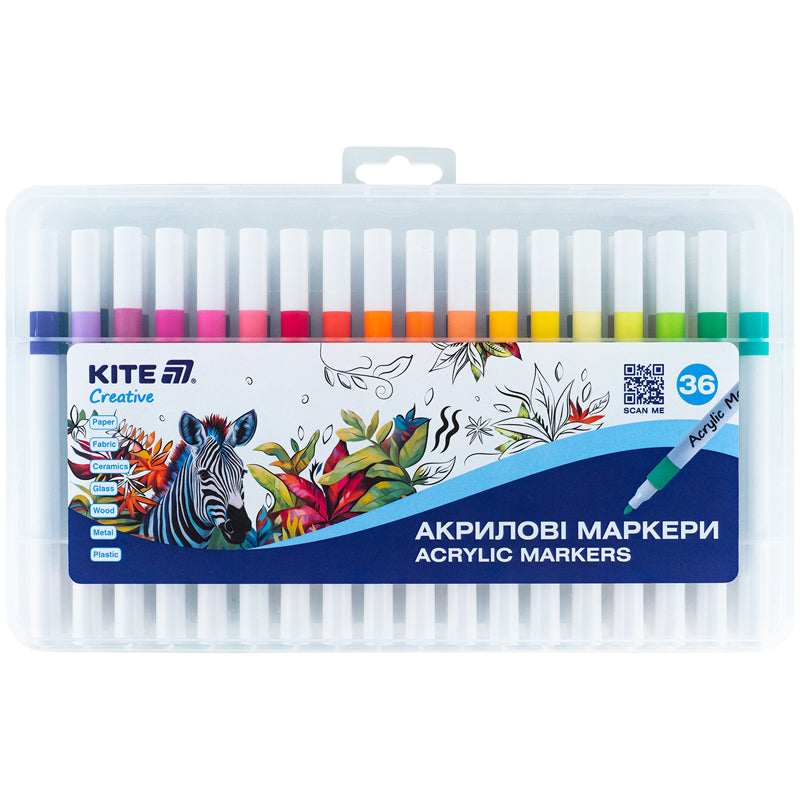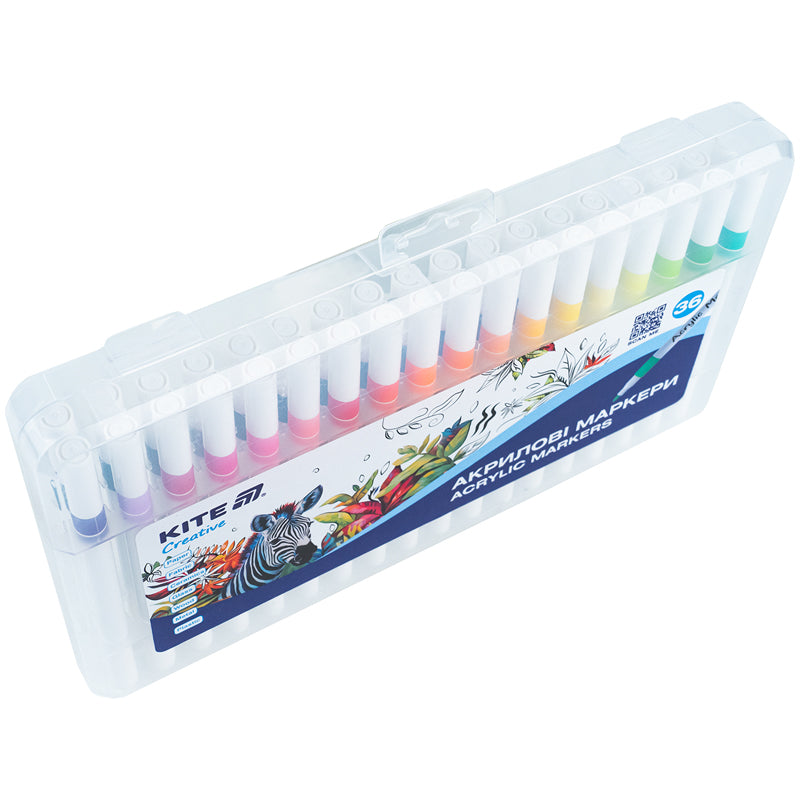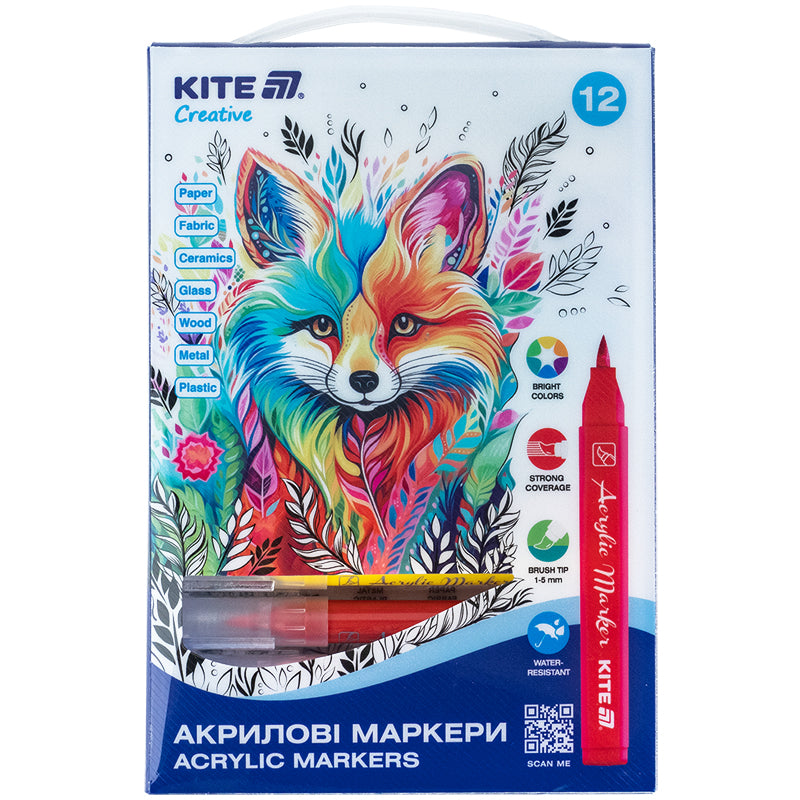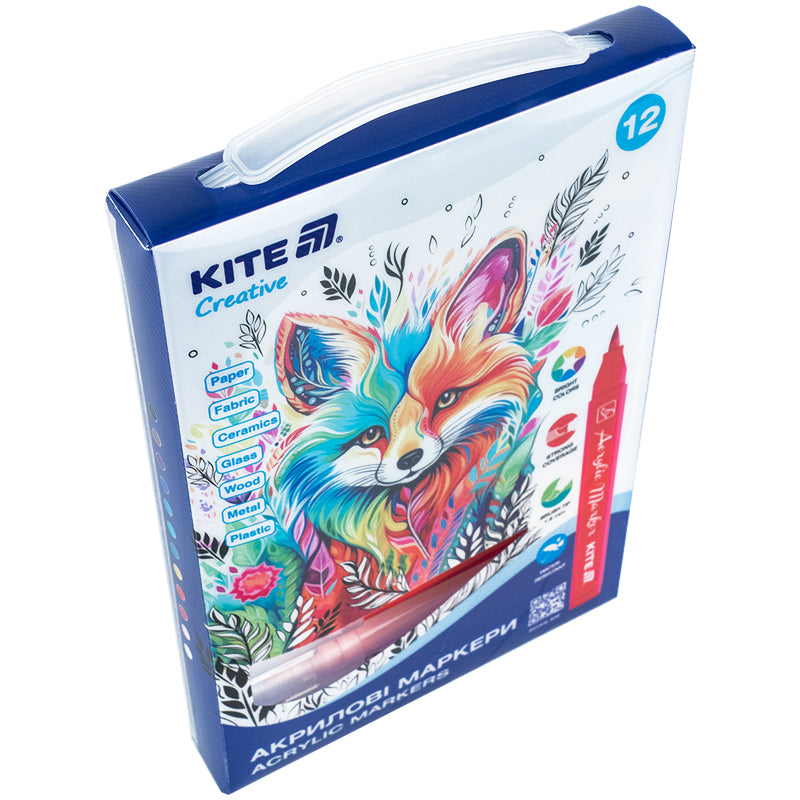



A unique creative tool that doesn't require a palette, water, brushes, or cleaning after painting, but offers as much freedom as paints. Meet acrylic markers. They combine rich colors, convenience, and possibilities. They can be used on almost anything — glass, wood, stone, metal — and open up vast opportunities for self-expression. Suitable for both children and adults: for hobbies, learning, and gifts.

What are acrylic markers and what makes them special?
Acrylic markers are special art tools that contain acrylic paint. Their composition includes:
- water — as a solvent;
- high-quality pigments — for deep and bright colors;
- polyacrylate compound — ensures durability and adhesion.
The paint has a thick but soft consistency. It flows easily through the nib and spreads evenly on the surface without smudging or dripping. This is a real hit for artists and illustrators; handmade craftspeople; designers; schoolchildren, students, teachers; parents who want to organize engaging creative leisure for their children.
Advantages of acrylic markers
- ✔️ Bright and durable colors. High-quality pigments ensure richness. Even on black or dark backgrounds, colors remain vibrant.
- ✔️ Work on most surfaces. Paper, wood, glass, metal, plastic, ceramics — markers adhere even to smooth or porous materials.
- ✔️ Quick drying. Thanks to the water in the paint, it dries within a few minutes, which is convenient for layering or drawing on the go.
- ✔️ Blendable. While the paint is fresh, you can mix colors directly on the surface. This is useful for creating gradients and transitions.
- ✔️ Safe. Kite acrylic markers do not contain toxic substances. Suitable for children (under adult supervision).

Kite Creative: awakening your inner artist
The Kite Creative series is an invitation to the creative process. This series has a special spirit: to discover the artist within, regardless of age, experience, or self-confidence. There is no "I can't." There is "let's try." And the coolest thing is that the marker packaging has a QR code that leads to a world of ideas. Masterclasses, projects, inspiration for family evenings or quiet time alone. It's a real portal to creativity.
How to use acrylic markers: a practical guide with examples and ideas
Where and how acrylic markers are used: detailed cases
Drawing and illustrations
- Portraits, florals, landscapes, abstract compositions, geometry.
- Comics, sketchbooks, art books, and original illustrations.
Decorating and handmade crafts
- Painting dishes, candle holders, wooden boxes, shells, stones.
- Painting gadget cases.
- Wall calendars, mandala lanterns, motivational boards.
- Painting musical instruments, stained glass on windows, Christmas tree decorations.
- Decorating gift packaging.
Calligraphy, lettering, and holiday decorations
- Writing motivational and holiday phrases on cardboard, wood, mirrors.
- Greeting cards, posters, holiday decorations.
Restoration and household use
- Covering scratches on furniture, stains on various surfaces.
- Restoring old frames, making spot corrections.
Ideas for inspiration
- Label herb jars in the kitchen with a white marker and leaf drawings.
- Draw your favorite quote on a wooden board or stones for the garden.
- Create a wall collage or dream map marking travel destinations.
- Paint dried leaves for autumn decor.
- Make a collection of wooden stickers, keychains, or pendants.
- Restyle interior items with a new design — ethno, minimalism, geometry.
- Decorate gift packaging or create unique tags.
Ideas for activities with children
- Personalizing notebooks, journals, diaries.
- Emotional tags with supportive messages.
- Developing fine motor skills by drawing dots, lines, and contours.
- Creating custom board games.
- Family calendar with important events.
- Drawing timers and daily schedules.
- Decorating CDs — creating a series of "planets."
- Drawing emotions on stones — for games on emotional intelligence.
- Decorating a treasure box — everyone adds their symbol.
- Drawing "a day at school" in comic format — a fantastic creativity booster.
Acrylic marker drawing techniques
- Color fill — apply solid, wait for it to dry, then apply the next layer.
- Gradient — while the paint is fresh, blend the color or mix two shades.
- Outline + fill — first a black or dark outline, then colorful infill.
- Dot-art — apply small dots of different colors.
- Hatching, doodling — easy, simple, stress-relieving.
- Layering — after complete drying, add new details on top.
Marker care
- Store horizontally so the paint distributes evenly.
- Close the cap immediately after use.
- If the nib dries out, moisten it with water or wipe it with alcohol.
- Don't press too hard — markers work smoothly.
- If using dark and light colors together, allow the first layer to dry completely.
Acrylic markers offer the opportunity to create easily and beautifully, anywhere and anytime. They open up a world of colors, experiments, and mood. One set — and hundreds of ideas. And with Kite Creative, this journey into creativity is even more exciting, because inspiration is always at hand.