


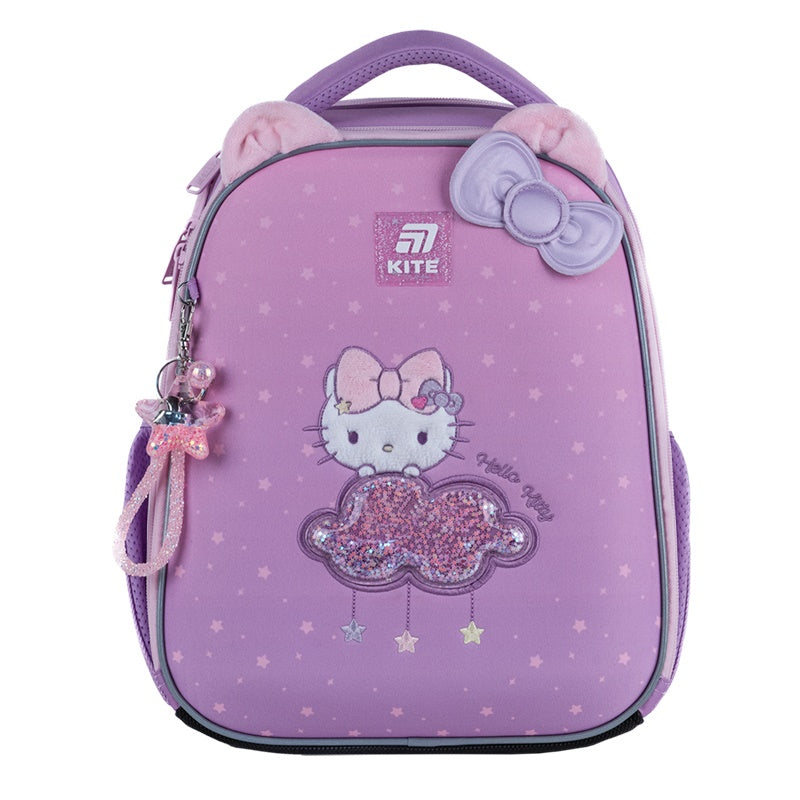
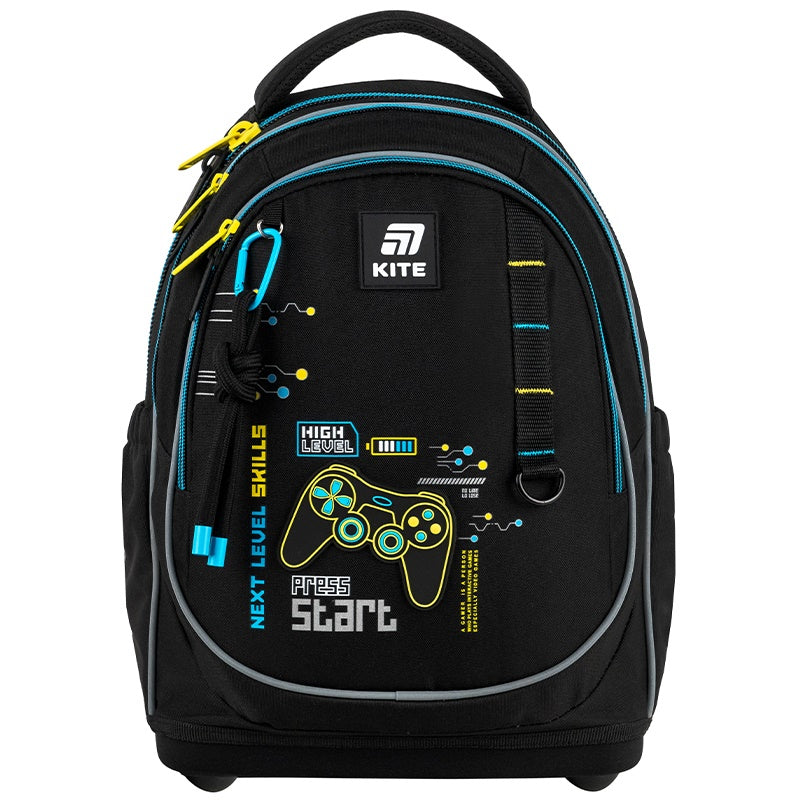

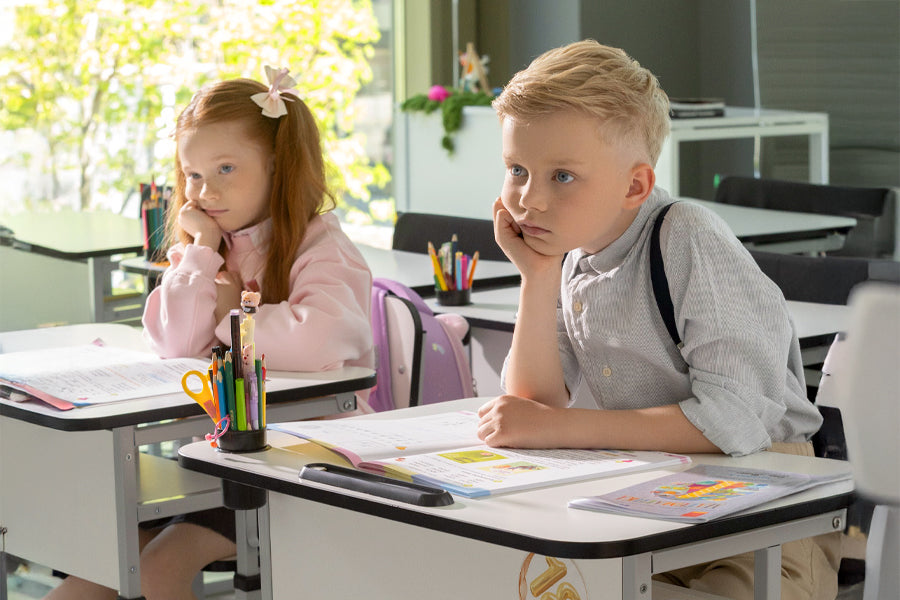
School rules around the world are not just strict requirements, but also fascinating traditions that reflect the uniqueness and diversity of cultures. Many interesting facts will surely surprise you!
We have already written in our blog about the ban on hair dyeing in Japan and daytime naps in China. We mentioned yoga for children in Vietnam and the ban on slang in Great Britain. So, let's explore other interesting traditions that exist in different parts of the world. Let's put on our most comfortable Kite backpack and travel in our minds!
Unusual School Rules and Traditions in Different Countries of the World
- Japan — schools without cleaners. Instead of hired staff, students themselves tidy up classrooms, wash floors, and even toilets. This is not a punishment, but a tradition that fosters responsibility and respect for work.
- Great Britain — late? Pay up! Morning preparations are difficult for some, but in British schools, it can hit your pocket: if a child is regularly late, parents are forced to pay fines.
- Kenya — haircuts by the rules. No hair experiments! Boys have short hair, and girls are forbidden to dye their hair or do elaborate hairstyles. All for discipline and equality.
- India — barefoot to knowledge. Cleanliness is paramount! In many Indian schools, students leave their shoes outside the classroom door to maintain order and hygiene. Some schools hold classes outdoors, as this helps with better learning.
- Finland – students study without homework and spend less time in classes than in most countries, but their education is one of the best in the world.
- South Korea – the school day can last until 9 PM, as students attend additional classes after their main lessons.
- Germany – if a student fails to cope with the curriculum, they can stay in the same class for another year, and this is considered normal. Students are also obliged to attend school every day, and unexcused absences are punishable by a fine. If a student is spotted at the airport during the school period, their parents may face significant financial penalties.
- France – lunch in schools lasts up to two hours, and the menu includes several dishes, because healthy eating is no less important here than education.
- Canada – schools have special rooms for relaxation and stress relief, where one can meditate or simply be alone.
- Sweden – students are allowed to call teachers by their first names to reduce distance and make learning more comfortable.

School Rules and Traditions in Ukraine
Ukrainian schoolchildren not only study diligently but also know how to make school days bright. Our schools are known for their great sense of humor, ingenuity, and ability to unite. That's why Ukrainian schools give birth to traditions that uplift spirits, uphold important values, and even become a national tradition.
- Your grades — your business. The teacher has no right to announce them to the whole class. This is a matter of privacy and respect.
- Duty — by choice. Cleaning the blackboard or sweeping the classroom can only be done voluntarily — no coercion.
-
Phone — not a toy, but not confiscated. The school administration can prohibit its use during lessons, but has no right to take the device away.
Disciplinary violations are not a reason for expulsion. Even a student who behaves very badly has the right to remain in class. - Uniform by choice, not by command. There is no longer a single school uniform — only dress code recommendations.
- Homework without overload. For grades 1-4, there are limits on the amount of homework so that children have time to rest.
- No violence or humiliation. Verbal pressure or physical punishment is taboo for a teacher.
- Textbooks can be changed. If the learning material is of poor quality in the opinion of parents and the teacher, it can be replaced with a better one.
- Break time is sacred. Students have the right to a guaranteed break between lessons, even if the teacher does not have time to finish the topic.
- School talent fairs – Ukrainian schools often hold "Cossack Fun" events where children compete in agility, strength, and erudition.
- Outdoor lessons – some schools have introduced classes in parks and squares, as fresh air helps in better assimilation of material.
- Reverse Day – in some schools, students can be teachers for a day, and teachers can become students.
- No grades in primary school – so that children are not afraid of mistakes and learn with pleasure, many New Ukrainian School (NUS) primary schools have replaced grades with verbal comments.
- School greenhouses and gardens – some schools have their own mini-farms where students grow vegetables and herbs for the school cafeteria.
- Yoga or Aikido instead of physical education – some modern schools offer alternative physical education lessons so that everyone can find an activity they enjoy.

What can every school wish for?
Not by rules and prohibitions alone. School is also a place of development, entertainment, support, and unity. To be closer to children, address their social problems, and increase interest in school life, schools are increasingly initiating activities, flashmobs, and initiatives:
• No-lessons Day — Great Britain
In British schools, they hold a "No-lessons Day" where students can engage in various activities, visit museums, or conduct thematic workshops. This allows them to develop other skills and take a break from the usual learning process.
• School Flashmob — USA
Flashmobs in US schools have become popular as a way to unite the team and boost student morale. They are often organized to support various initiatives or celebrate important events.
• Week Without Mobile Phones — Japan
In Japan, a week without mobile phones is held, where students can learn the importance of being motivated and interacting with each other without using gadgets. This helps improve communication among students and reduces stress levels.
• Health Day — Germany
In Germany, schools often organize "Health Day," where students engage in physical exercises, learn about proper nutrition, and mental health. This is a great initiative that promotes an active lifestyle.
• Thematic Weeks — France
In France, many schools organize thematic weeks, such as "Science Week" or "Culture Week." Students can participate in special events, lectures, and documentary screenings, allowing them to expand their horizons of knowledge in an unusual way.
• Stress-Free School — Sweden
In Sweden, methods for reducing stress among students are actively practiced. They incorporate meditation, yoga, and other relaxation techniques directly into the school schedule to help children stay calm and focused.

• No Backpack Day – USA
One of the most popular school flashmobs in modern Ukraine! It originated in the USA in 2012 as a charity initiative. Its goal was to draw attention to the problem of a lack of school supplies for children in developing countries. Students come to school without their usual backpacks, instead carrying textbooks in pots, suitcases, baskets, baby strollers, or even microwaves! This is a fun way to show creativity and lighten up school days.
• One Day in Pajamas — USA
In many American schools, a day is held where everyone comes in pajamas and slippers. This helps to relax and make learning more fun.
• Sock Day — Canada
Students wear the brightest, funniest, or even mismatched socks to lift spirits and foster an atmosphere of freedom and self-expression.
• Color Week — Great Britain
Each day is dedicated to a specific color, and students come dressed in appropriate attire. This adds vibrancy and makes school days more interesting.
• Silent Day — Australia
Students try to communicate without words, using gestures and notes. This is a way to understand what it's like for people with hearing impairments and to draw attention to inclusivity.
• Good Deeds Flashmob — Netherlands
Throughout the day or week, students perform as many good deeds as possible: helping teachers, supporting classmates, organizing charity events.
• Retro Day — France
A day when everyone comes in school uniforms from past decades or outfits from a specific era (90s, 80s, 70s) to feel the spirit of bygone times.
• Live Chain of Unity — Ukraine
A symbolic flashmob for Unity Day, where students form a chain, holding hands, recalling the unity of our country. Ukrainian school flashmobs are not just entertainment, but also a great opportunity to show creativity, support each other, and make learning brighter!
• The biggest school bell – in Ukraine, flashmobs are held where thousands of schoolchildren simultaneously ring bells, setting new records.

Rules to follow at school
Although different countries have their own peculiarities, there are several general school rules that apply almost everywhere.
-
What can and cannot be done at school?
You can study, make friends, and develop. You cannot offend others, cheat, or violate discipline. -
What is forbidden during lessons and breaks?
During lessons – interrupting the teacher, being on the phone. Running during breaks is also forbidden for safety reasons. -
What can happen for unexcused absences?
Unexcused absences can lead to disciplinary action. Students must attend school regularly. -
What is forbidden in terms of academic integrity?
Cheating and plagiarism. In almost all countries, this is a serious violation for which a student can be punished. -
What is forbidden in communication?
Insults, bullying, and aggressive behavior are forbidden. This can lead to punishments up to expulsion from school. -
What do you need to know about safety?
All students must follow safety rules at school, including in laboratories, sports halls, and on excursions. -
What should the appearance be?
Students' appearance should be neat and modest. Overly revealing or untidy clothing is prohibited, as it can distract from the learning process and disrupt discipline. -
What is forbidden regarding bad habits?
Smoking, alcohol, and drugs are strictly prohibited on school grounds, and violating this rule can lead to serious consequences.
All these rules and traditions indicate the importance of creating a comfortable and safe learning environment. And for students to be able to fully concentrate on learning and development, they need a warm, accepting environment and inspiring Kite school supplies.

