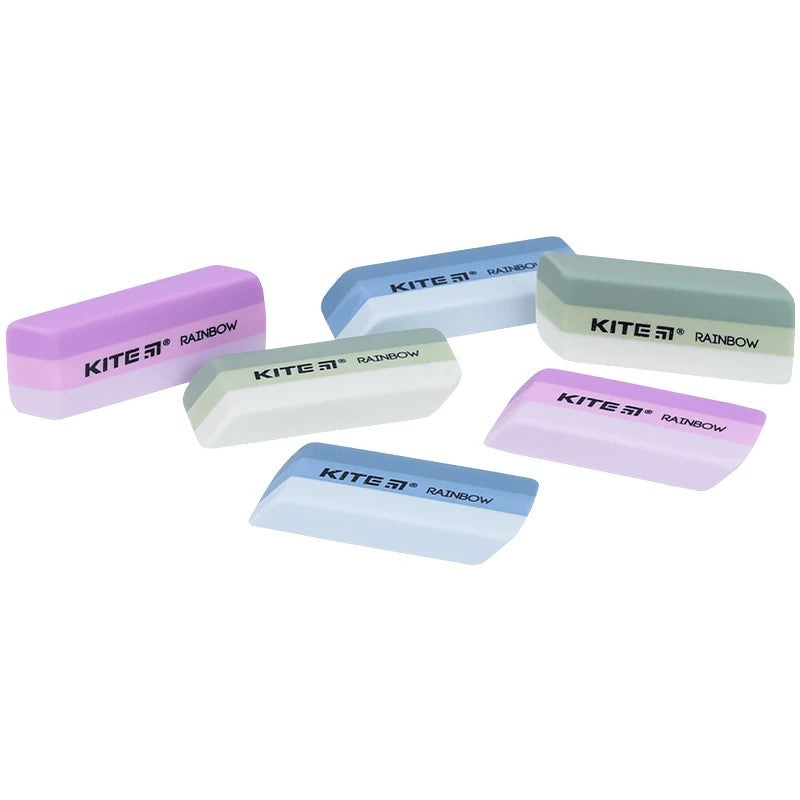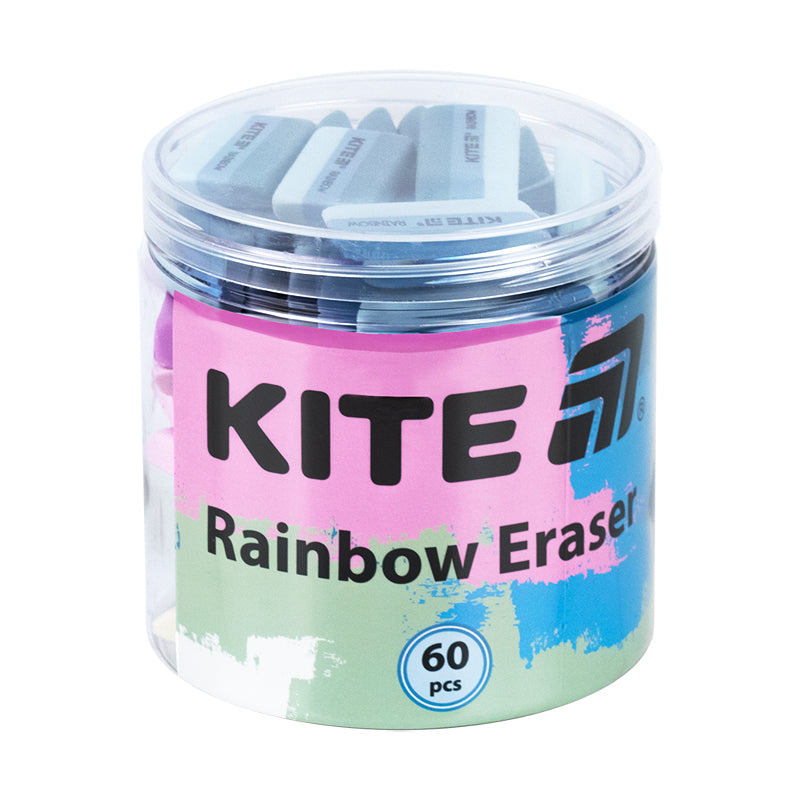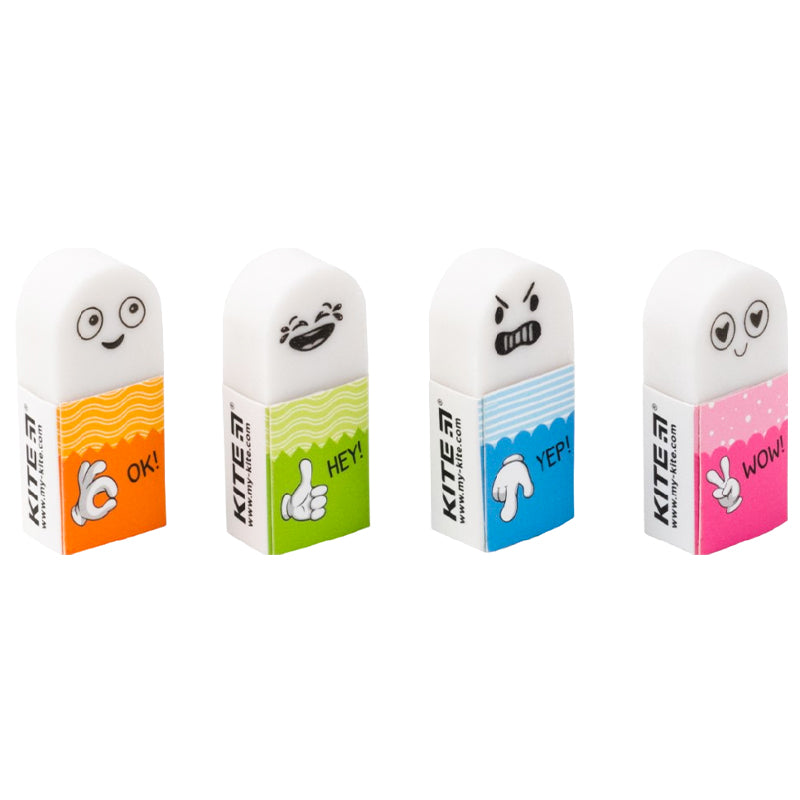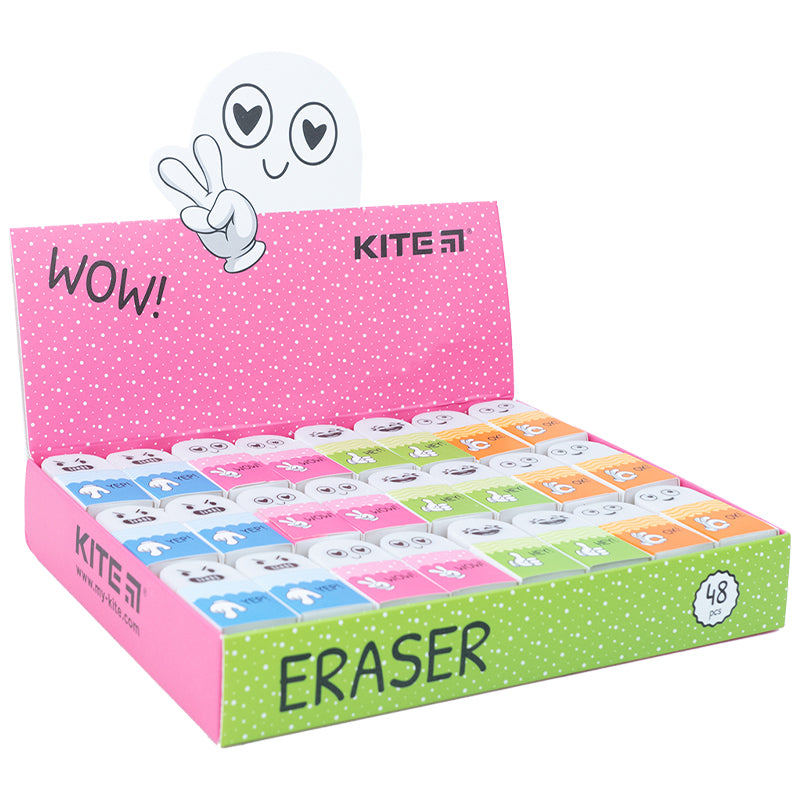


Learn about the history of erasers, their modern varieties, and the advantages of Kite erasers.
A Little History: Bread, Rubber, and an Accidental Discovery
Shall we start from afar? From ancient, ancient times. Before erasers, mistakes were erased with… bread. Yes, the soft part of bread was a universal "eraser" for artists, architects, and students in the 18th century. Other methods were even stranger – they used pieces of wax or even various abrasive crumbs.
Everything changed in 1770 when the English engineer and inventor Edward Nairne accidentally picked up a piece of rubber instead of bread. He erased a mark with it – and was amazed by the result. This is how the first stationery eraser appeared. And already in 1858, American Hymen Lipman received a patent for a pencil with a built-in eraser – a familiar item, isn't it?
Why Is an Eraser So Important?
It seems like a trifle. But if you get a bad eraser, you can say goodbye to neatness: smudged graphite, scratched paper, gray marks. A good eraser, however, is like a good friend: it supports, corrects, doesn't judge, and leaves no traces.
Kite Erasers
These are no longer the scratchy, "play-dough" monsters from the 90s. These are technological, convenient, and careful tools for neat writing, drafting, and drawing. All Kite erasers:
- don't crumble;
- don't leave smudges;
- don't damage paper;
- and have an aesthetic look that's pleasant to hold (which is important, especially for a child);
- important: no scents. Even if it's a pleasant fruity smell, it's an unnecessary temptation to bite off a piece;
- are made from safe materials;
- undergo quality control at every stage.

Types of Kite erasers: what they are made of
1. Synthetic rubber
This is a classic that works.
- Ideal for daily use.
- Gently erases graphite pencil marks without leaving dirt.
- Leaves paper undamaged.
2. Thermoplastic rubber (TPR)
More flexible and elastic.
- Handles harder graphite pencils well.
- Suitable for drawings where precision is important.
- Has pleasant elasticity – doesn't break or crumble.

3. ECO PVC – universal hero
This is next level!
- Erases graphite, "write-and-erase" pens, correction fluid, and tape adhesive.
- Has a plastic holder that fits comfortably in the hand.
- Doesn't slip, doesn't get dirty, doesn't scratch.
- Stylish donut shape – a perfect balance between practicality and design.
- Colors – your choice, to match your mood.

How many erasers do you need?
One eraser is like one sock. What if it gets lost?
- Different erasers for different tasks: soft for a notebook, firm for sketches.
- A couple for the pencil case, a few to have at home.
- A spare one in case of loss.
- Another one to share with a friend.
- And another one just because it's funny (a donut eraser is an art object!).
Design – for a good mood
An eraser can be not only practical but also a favorite.
- Colorful – a new color every day.
- With a cardboard holder – doesn't slip, doesn't get dirty, easy to put in a pencil case.
- With glitter – because a little magic never hurt anyone.
Multifunctional "all-in-one" accessories
When every centimeter of a pencil case is worth its weight in gold, and every minute of a lesson counts, multifunctional stationery helpers become a real treasure. These are not just sharpeners or erasers – these are full-fledged devices for learning, creativity, cleanliness, and order on the desk. And they look fun and amusing.
Kite 365 Faces: sharpener-eraser-brush
This is a true stationery transformer. The funny "monster" combines a sharpener with a container, a detachable eraser, and a soft brush for sweeping shavings from the page. All in one accessory that is easily disassembled and cleaned. Maximum utility, no mess.

Funny facts about erasers
- The world's largest eraser weighed over 4 kg – and yes, it was actually made by eraser fans.
- In Japan, there are entire stores dedicated solely to erasers – over 1000 types!
- In some Canadian schools, erasers are considered part of "personal stationery hygiene" (because only the owner uses them).
- Eraser collectors are a real community. Their collections number thousands of specimens!
Interesting bonus: what else is an eraser called in Ukraine?
Oh, this will be a real linguistic treat! Here is a list of synonyms, dialectisms, and just common names for a stationery eraser, which are used or were used in different regions of Ukraine – and beyond. Let's laugh and remember together: what was a stationery eraser called in your class?
Synonyms, dialectisms, colloquialisms:
- Styrachka — a common neutral form, especially in central regions.
- Stiorka — eastern and southern Ukraine (Kharkiv, Donetsk, Dnipro).
- Styralka — western Ukraine (Lviv, Ternopil, Volyn).
- Lastyk — borrowed from German "elastisch", popular among schoolchildren.
- Humka — officially, technically, but also commonly used.
- Humovka — occasionally in the west, a variant of colloquial shortening.
- Styrach — a humorous form, sometimes as a child's word.
- Zatyrochka — Western Ukrainian villages (quite rarely).
- Vetyrochka — occasionally in Poltava and Sumy regions.
- Otoy kubyk, shcho styraye — a gem from some grandmothers (that cube that erases).
- Styratel — Surzhyk or ironic usage.
- Humovets — very localized, more like a invented form.
- Styranka — appears in children's speech (Kyiv region, Cherkasy region).
- Tyrka — a shortened variant in the Lviv or Bukovyna regions.
- Paperoochyschuvach — a jokingly scientific variant (paper cleaner).
- Slidoznyushchuvach — a creative form, sometimes a meme (trace destroyer).
- Humunchyk — humorous, like "my little eraser".
- Humunkul — teenage slang.
- Zatyrkuvach — a funny "nickname".
- Humaster — in the style of "marker-master" – in TikTok culture :)
And remember: Kids choose the best. They choose Kite!