



Satchel vs. Backpack: What's Better for First Grade?
Satchel or backpack – that is the question. Hamlet pondered philosophical matters, but parents of first-graders truly face a difficult choice: which backpack is better, a framed or a soft one? Or perhaps something in between – a semi-framed one?
We've decided to help you with this question and tell you which type of backpack is best for elementary school. You'll find the correct answer at the end of the article, but don't rush to scroll down. We'll explain the difference between a satchel and a backpack and what characteristics you should pay attention to first.
What's the Difference Between a Satchel and a Backpack?
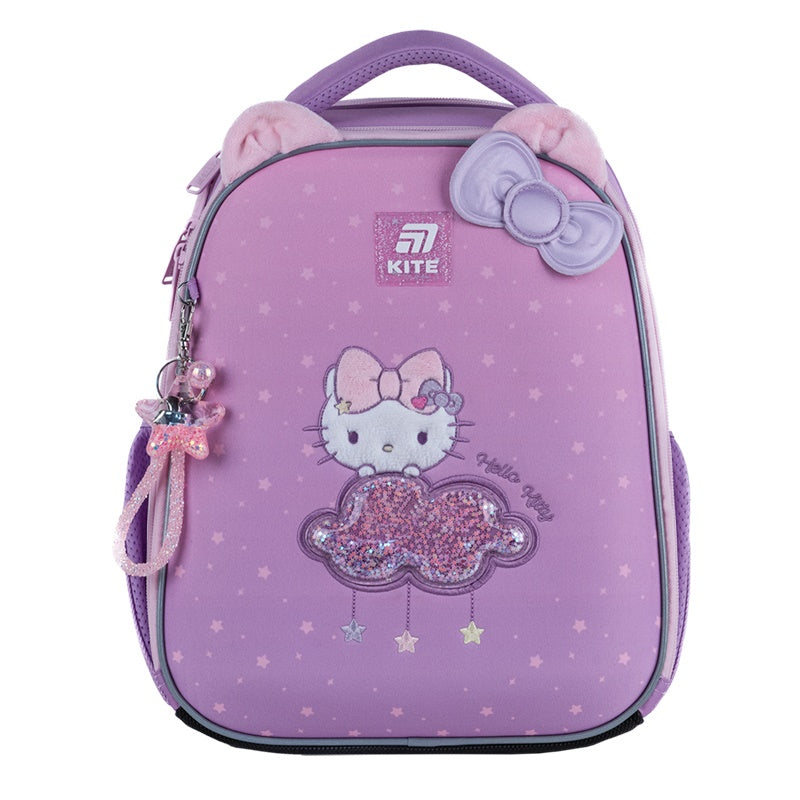
The main difference of a satchel is that it's essentially a backpack but with a rigid frame. Sometimes it's even called a "framed backpack." It maintains its shape, regardless of its contents, which is why it's considered a good choice for students in grades 1-4. No matter how the student handles the satchel, the contents will remain in order: notebooks, albums, and paper won't get crumpled. This is important because some teachers may lower grades for untidiness.
Choosing a Backpack by Weight
High-quality school backpacks weigh up to 1 kg. Kite school backpacks are made according to these standards. According to orthopedic recommendations, there are norms for schoolchildren where the weight of a filled satchel should not exceed the following values:
- up to 2 kg for 6-8-year-olds;
- up to 3 kg for 9-12-year-olds;
- up to 5 kg for 13-14-year-olds;
- up to 6 kg for 15-16-year-olds.
Therefore, manufacturers try to minimize the weight of an empty product as much as possible. The weight of the heaviest Kite satchel is 995 g. The heaviest elements are:
- a dense front panel;
- an ergonomic back with reinforced pads;
- wide straps.
All together, they add extra weight, but at the same time, they ensure proper posture for the student, prevent scoliosis, and protect the contents of the satchel from creasing.
How to Choose the Size of a School Backpack
Even in the same class, children can have significant height differences. In this case, what should you focus on to find the ideal satchel size? For elementary school, Kite backpacks are available in sizes S and M for children with heights of 115-130 cm and 130-145 cm, respectively. The product is ultimately adjusted to the height using the straps so that the bottom is directly above the lower back and the top is at shoulder level.
Orthopedic Components
Grandparents of current students could only dream of such happiness as an orthopedic back in a satchel, wide soft straps, and a chest strap. Current models of backpacks for first-graders are complex constructions, where everything is aimed at preserving the student's spinal health:
- Satchels use the patented orthopedic back Ergo Kids or Ergo Back, which supports natural posture and prevents scoliosis;
- Kite has models that have passed complex orthopedic tests and received the IGR quality certificate from the German Institute of Health and Ergonomics for compliance with European standards DIN 33419 / EN ISO 15537. Choose models 501, 531, 555, 700, 702, 706, 720;
- Wide S-shaped straps prevent discomfort in the neck and shoulders;
- A removable chest strap with reliable fasteners ensures a snug fit of the backpack to the back, so the weight of the backpack's contents is evenly distributed across the back, reducing the feeling of burden on the shoulders and lower back;
- Book dividers with an elastic band fastener securely fix textbooks, helping to prevent the center of gravity from shifting;
- A dense bottom does not sag under the weight of textbooks.
What Materials Are Used for Quality Satchels?
Good quality backpacks are made from dense synthetic materials. Kite satchels are sewn from durable polyester, which withstands heat and cold equally well, is tear-resistant, and the designs retain their original appearance for a long time. A child is more likely to outgrow their backpack than for it to become unusable.
Quality Hardware
Before purchasing, be sure to check the zippers. Plastic zippers will quickly break down, and you'll have to pay for repairs. It's better to immediately buy a satchel with good hardware.
Now you know exactly how to choose a satchel for a first-grader so that it is high-quality and reliable. And the answer to the question at the beginning of the article is: it absolutely doesn't matter what type of backpack you choose for your child: a light soft one, a compromise semi-framed one, or a full-fledged "framed" one. The main thing is that all orthopedic components are observed, and then your student will thank you for a healthy back and comfort.
Kite Backpacks – from 1st grade and forever.

