




History of the Backpack
Do you know anything about the history of the backpack? Ancient backpacks looked very primitive: a frame made of 4 sticks, covered with a bag made of animal skins. That was the whole design.
It was redesigned and improved countless times until it transformed into a fashionable, comfortable, and functional accessory — a symbol of adventure, travel, and freedom. And the history of the backpack began like this.
5000 Years Ago
High in the Alps, among snow-capped peaks, the skeleton of an ancient man who lived 5000 years ago was discovered. To be precise, it was found in 1992 in the Alps on the Similaun glacier. With him was a leather bag, reinforced on a U-shaped frame made of a hazel rod and two larch planks. It is believed that this is the very first backpack that has "survived" to this day.
Even then, people were looking for a way to carry heavy objects, and also to keep their hands free. After all, they needed to hold a stick or a weapon in something.
Evolution of the Backpack until the Early 20th Century
What next? And then, in different corners of the world, people invented and improved the backpack. For example, the Aztecs came up with carrying cargo in a cacaxtli. This was a carrier with a wooden frame back, where instead of familiar shoulder straps, a wide strap was adapted to be worn on the forehead.
In Rus', birch bark boxes and knapsacks were used in everyday life. Backpacks were worn by Templars in the Middle Ages. North American Indians had knapsacks, and in Germany, a monument was even erected to a water and wood carrier with a backpack-box.
The Backpack Today
In the early 1930s, the "kolobok" backpack appeared in the Soviet Union. It got its fairy-tale name due to its round shape. But the most famous backpack of the USSR era is still considered the "Ablakovsky." Perhaps older people still use it to go to their dachas. Ask around, and you might make an interesting discovery.
Comparing the first clumsy designs with a modern backpack is like comparing a dugout with a skyscraper. Over its long lifespan, the knapsack has undergone numerous changes. Today, comfort and beauty have been achieved, which one could only dream of before.
Designs, fabrics, and models have been improved. Backpacks are now categorized as:
- school;
- city;
- business;
- women's;
- sports;
- mountaineering;
- for mothers (slings), etc.
If we compare the primitive design with the modern model, the evolution of the backpack looks like this:
- From a shapeless bag, the backpack has turned into a product with clear lines and proportions. Framed, semi-framed, and soft models are produced.
- The back has become padded or orthopedic to support spinal health.
- Proper S-shaped straps do not slip during movement.
- The chest strap tightly presses the backpack against the back, preventing the center of gravity from shifting while walking and running.
- There is a handle for carrying from place to place.
- A large number of pockets, including for gadgets, glasses, shoes, secret pockets for documents, and other necessary small items.
- External pockets for a water bottle or thermos.
- Reflective elements for safety in the dark.
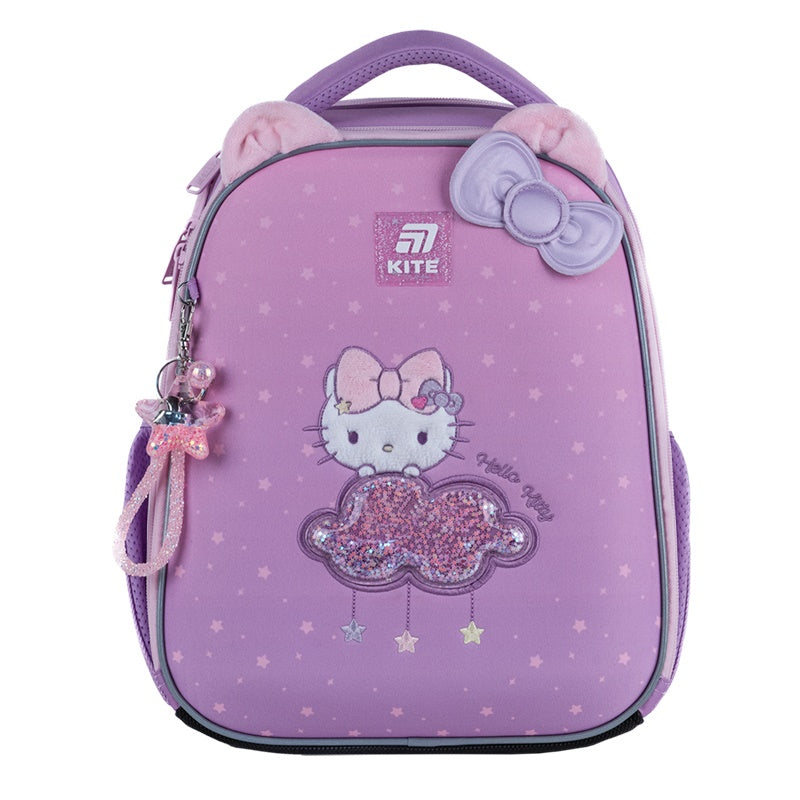
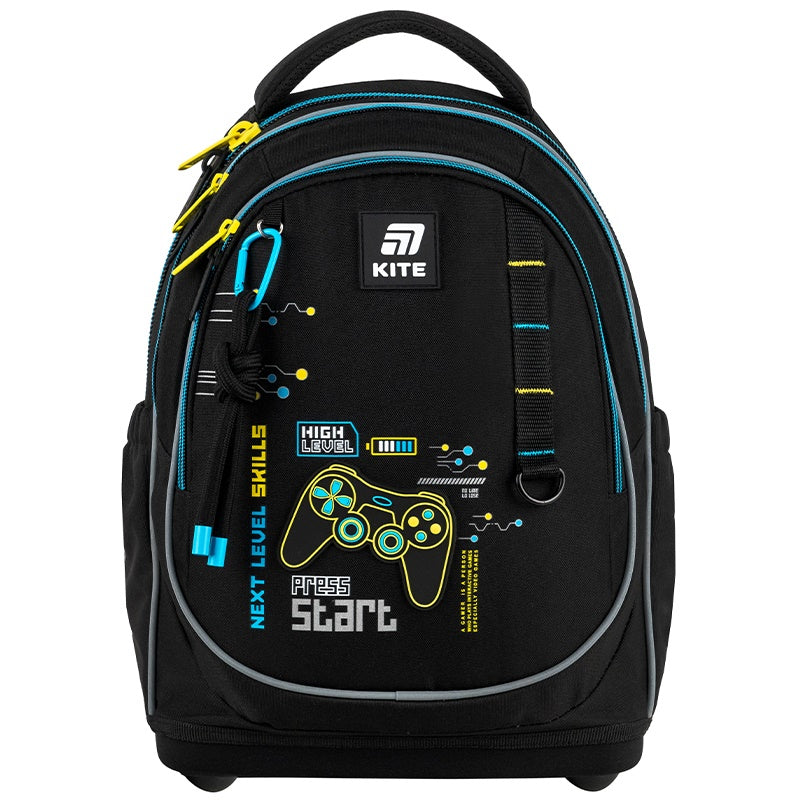
- Bright designs have appeared: a riot of different colors and shades, the ability to apply images of favorite cartoon characters, fairy-tale characters, logos, animals — virtually any images.
- The presence of accessories and decorations distinguishes the owner and adds charm: fur elements, keychains, sequins, changeable badges, 3D rubber badges, holographic prints, and inserts.
- Durable fabrics and hardware.
Agree, the backpack has made a gigantic leap in its evolution. At Kite, we never stop developing. Each new collection of backpacks contains something new and interesting, so you fall in love with our products and stay with us for many years.

